


Stop Reporting Impressions. Start Defending Your Audience
Most CMOs I've worked with know somewhere in the back of their mind that when they're trying to explain why social media spend is working in board meetings, they're making the wrong argument.
Impressions scale with budget and disappear when it stops. Reach is a cost, a recurring expense that tells you how many people were served your content, not how many actually chose to engage with it. These are the metrics social teams have been reporting for fifteen years, and they're the same ones that make finance directors raise an eyebrow every quarter.
The problem isn't the data, it’s the thinking behind it.
The metric that actually compounds.
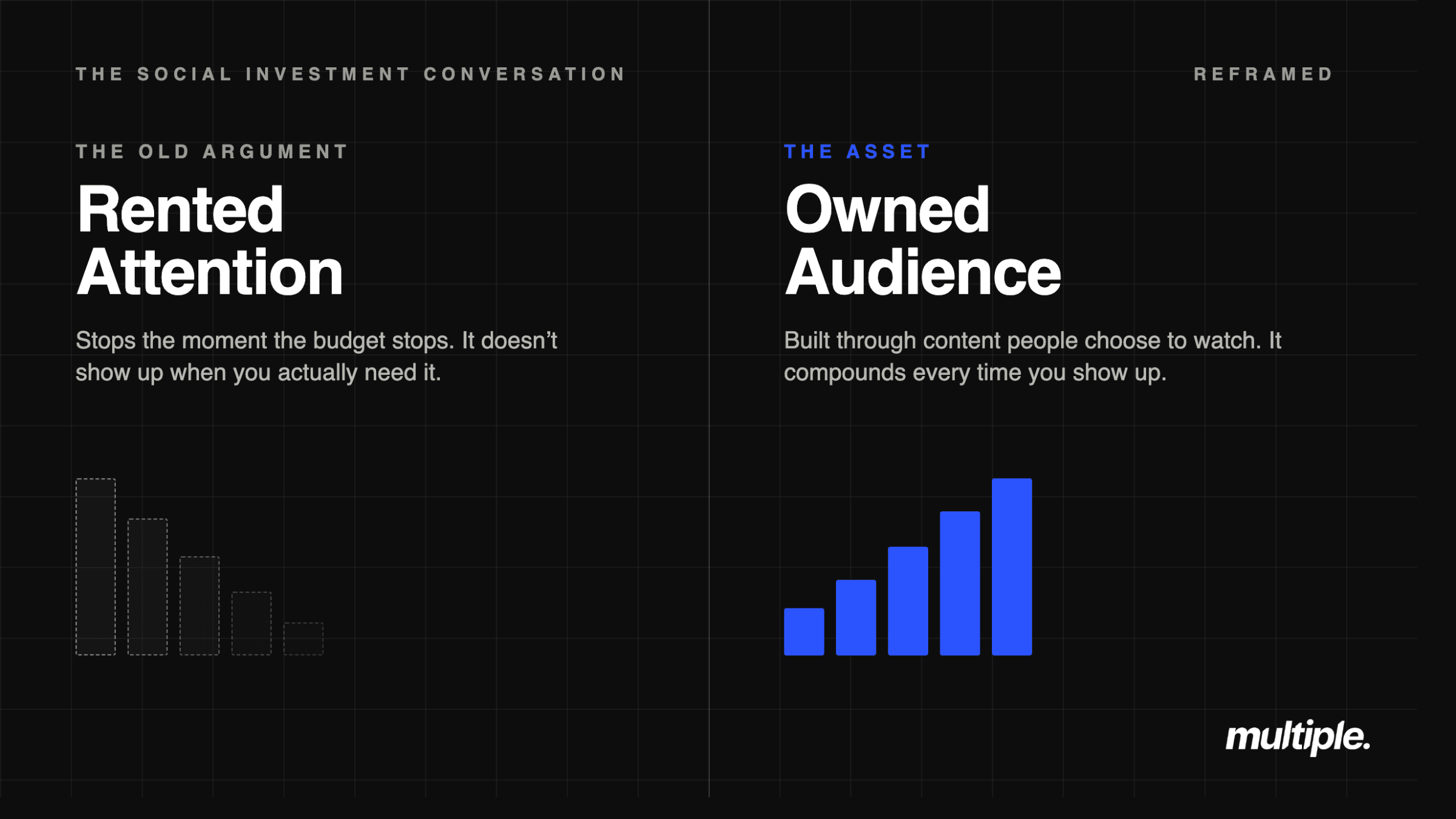
Paid reach stops the moment the budget stops. But an engaged audience, one built through content people genuinely chose to watch, follow and share, that's an asset that grows over time. Every piece of content that earns real engagement deepens the relationship. Every new follower acquired through entertainment rather than interruption is more likely to convert, advocate, and return.
That's the argument marketing leadership needs to be making in those board meetings. Not that the CPM was efficient, but that the audience grew by X percent and engagement depth increased, and here's what that means for our ability to reach those people the next time we have something worth saying. That shift in framing changes how you brief agencies, how you measure success, and how you invest.
What this means for how you buy?
The instinct is still to ask: how much reach can we buy for this budget? The better question is: what kind of audience are we building, and what does it cost us if we stop spending?
If the answer to that is you lose everything, that's not an audience. That's rented attention. And rented attention doesn't show up when you actually need it,. at launch, at renewal, when a competitor comes in with a bigger spend.
"The brands that will win the next decade aren't the ones with the biggest media budgets. They're the ones building audiences nobody can buy away from them."
Marketing directors respond to assets. Things that grow in value. Things that generate returns over time and aren't entirely dependent on next quarter's budget. An owned, engaged audience is that thing.